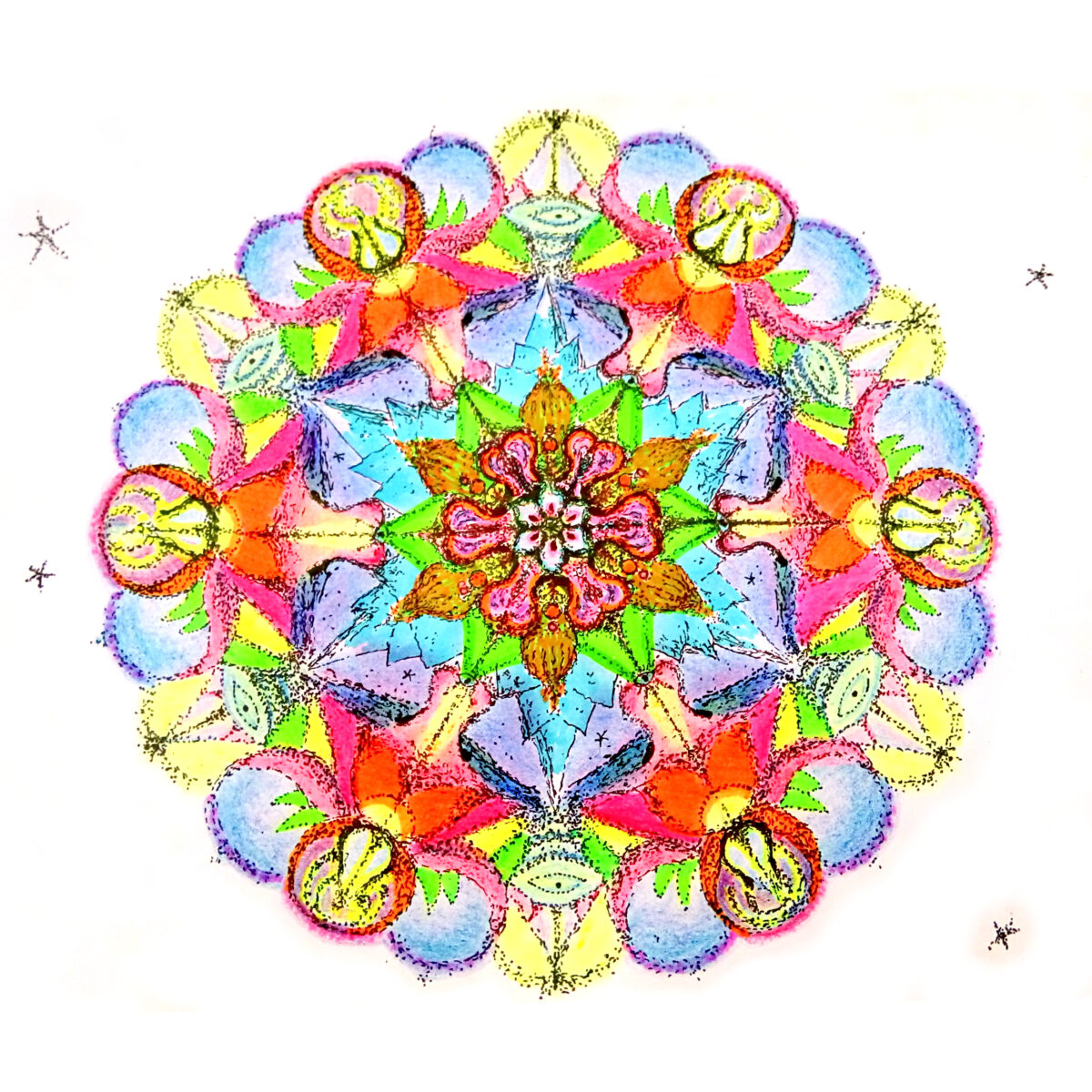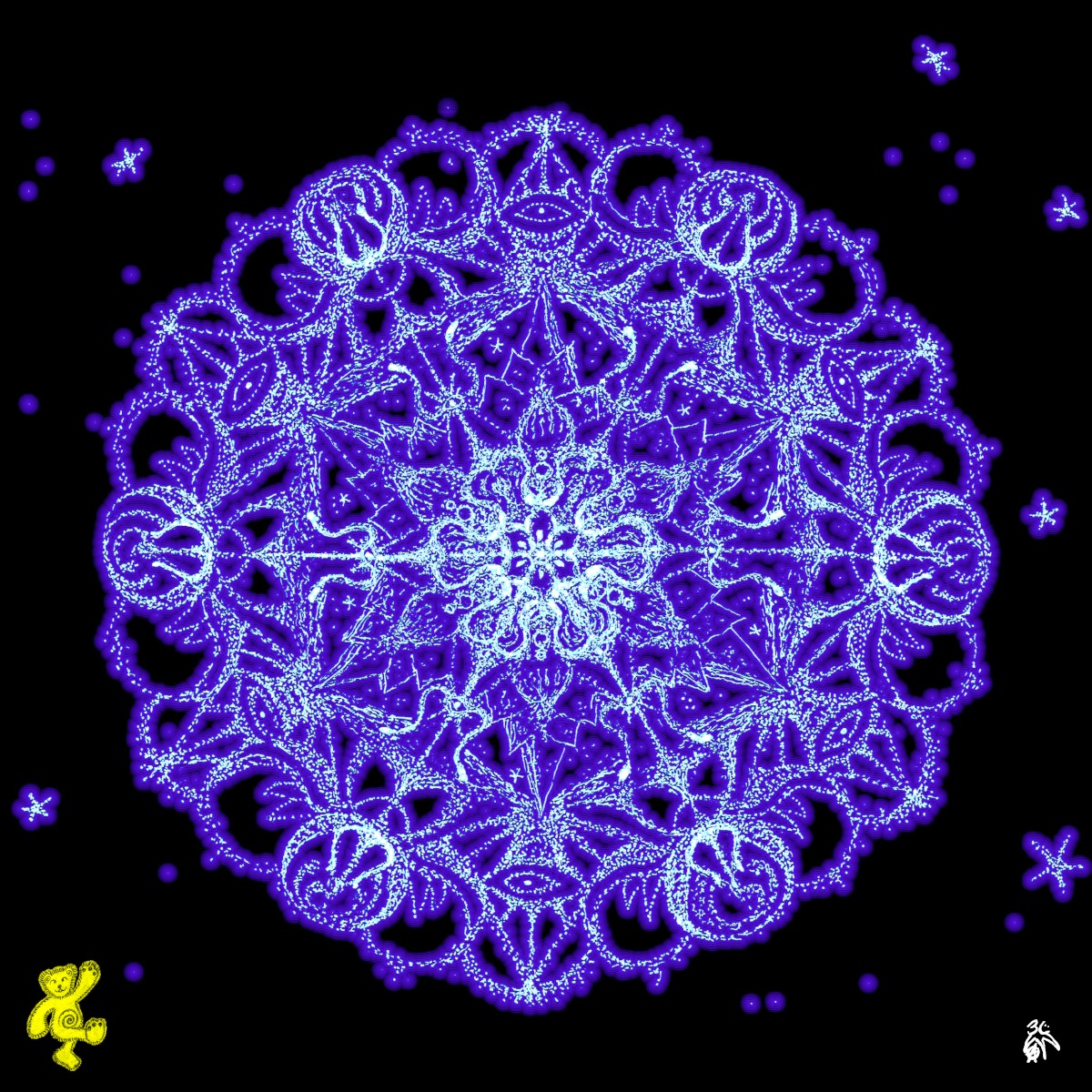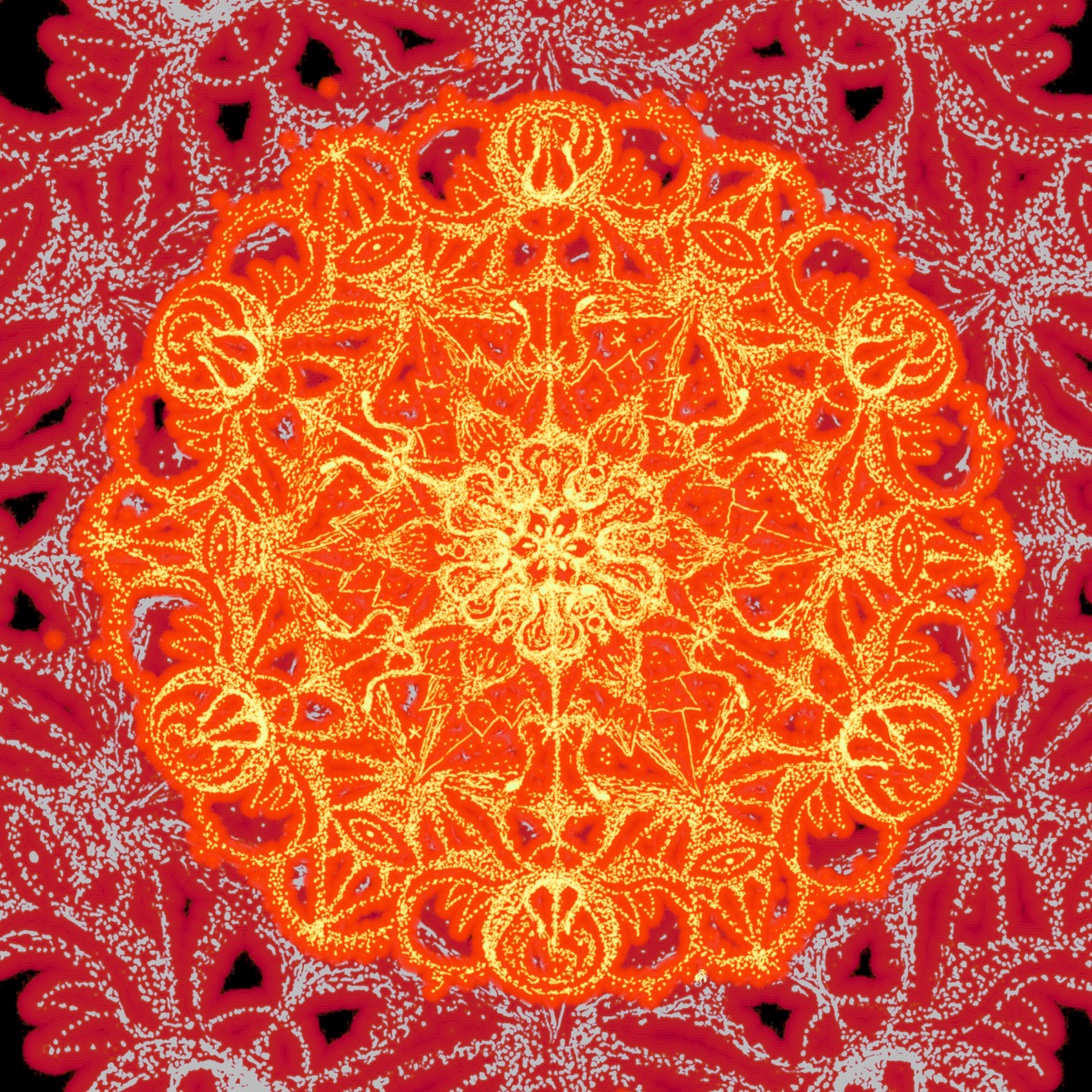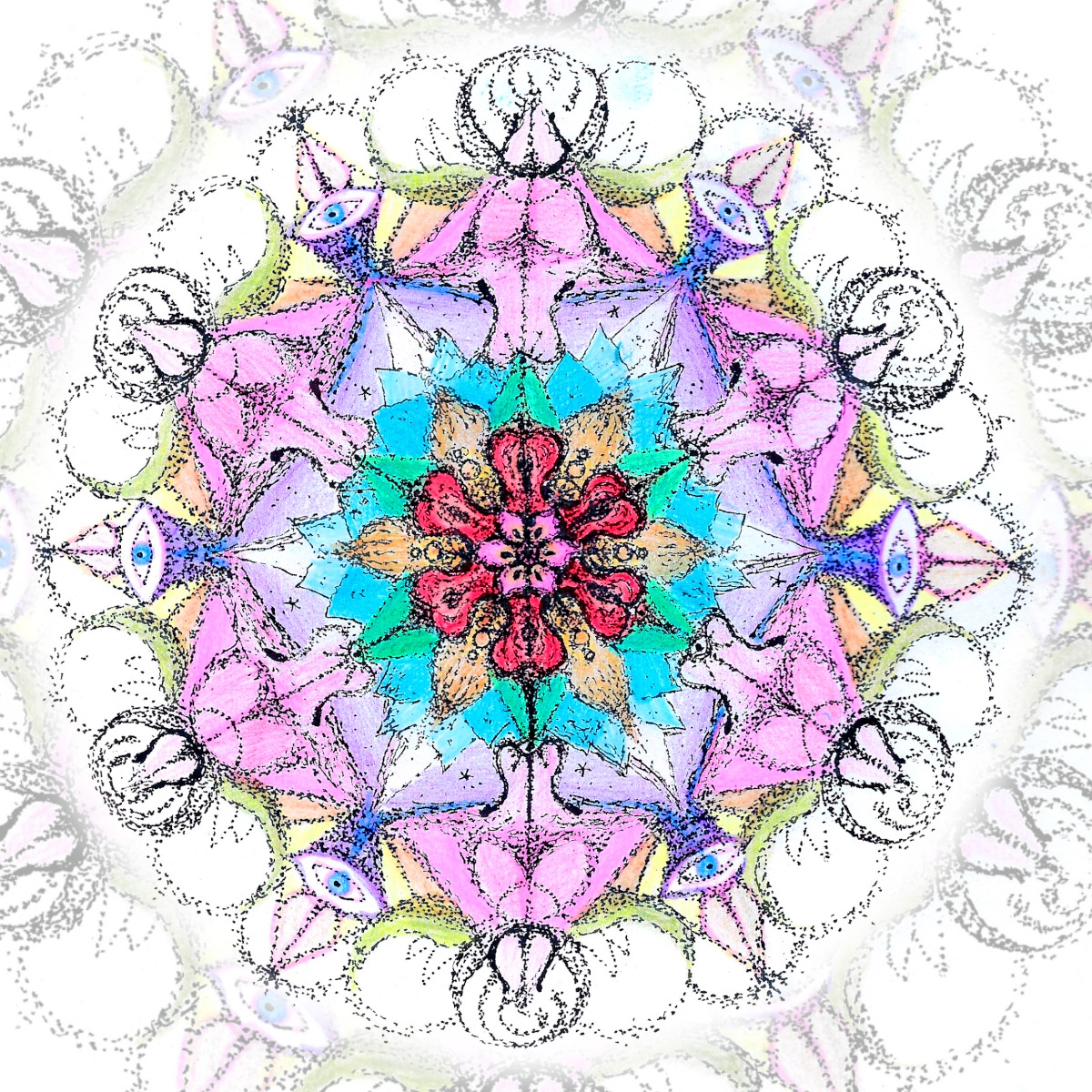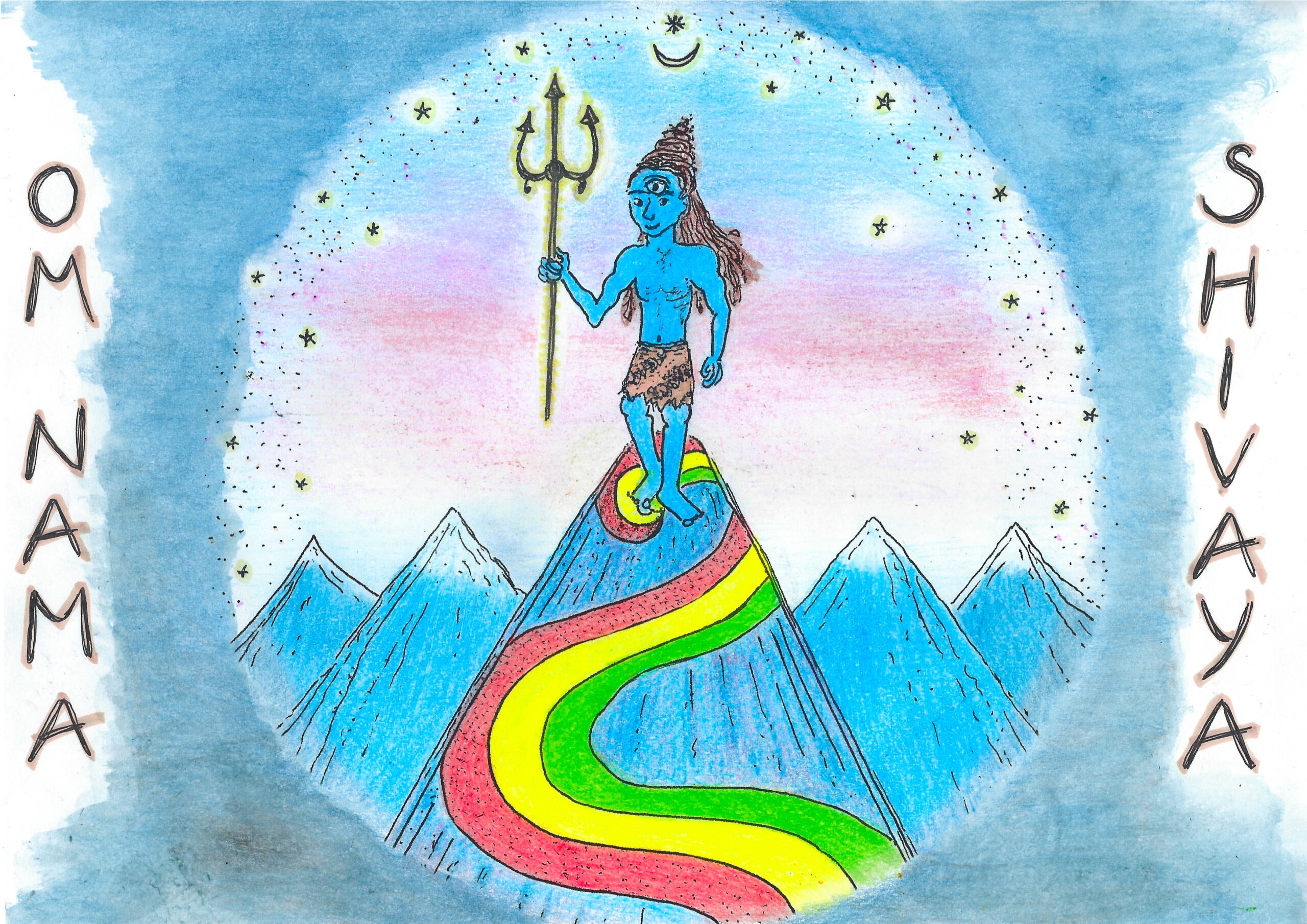
This mandala is dedicated to the great Lord Shiva. During the month of February (sometimes March) a significant Hindu festival in honour of Lord Shiva is celebrated throughout India and other countries. The Maha Shivaratri which means the great night of Shiva is usually happening in my birth month and last year Shivaratri even fell on my birthday which might be one of the reasons why i feel a real connection to Shiva.
Shiva is the deity of the universal life force and the Surpreme Being. His energy controlls the mind and helps counter emotional and psychological disturbences.

Shiva is the deity of the universal life force and the Surpreme Being. His energy controlls the mind and helps counter emotional and psychological disturbences.
Shiva is the transcendent reality of Rudra, his fierce form, which is related to Agni, the cosmic fire principle.
Rudra Mahadeva, whose essence is Shiva Tattva, the transcendent truth, is the primordial principle of Absolute Bliss. This principle which is beyond all manifestations appears in the Universe as Shiva, but only after a long time into the cosmic process. Shiva manifested much later in the creation and by the time Rudra arrived, all the higher worlds had already come into being, waiting for the lower world to be filled with mortals. Innumerable souls were waiting in the dark to be born into Prakriti, or the material world.
Shiva is the final and third aspect of the Cosmic Reality. The principle of the withdrawal and dissolution, indicated by Shiva, is necessary in the completion of the manifestation of the Universe. The manifest Universe is only complete when this last principle follows the principle of creation, represented by Lord Brahma and the principle of sustenance, represented by Lord Vishnu. The principal of withdrawal from creation is not only needed but truly important in order to take souls back to the Surpreme.
The hindu tradition allows for and even encourages the full range of iconographical representations in a form-based and in an abstract way. This approach allows a full spectrum and a full spiritual unfoldment of all artistic and creative expression. The greatest diversity of expression is found related to Shiva which inspired me in the creation of the Shiva Meditation Mandala and other artworks.
All forms of Shiva are but appearances in the greater dance of Shiva who is behind and beyond all forms. Some of his forms appear like the image of a physical person and some scholars believe that Shiva originally was a person, perhaps a great Yogi who lived long time ago. Even those who hold that Shiva is transcendent recognise that he can descend and appear in the human realm and work through various great teachers and gurus.
Shiva is the Yogeshvara, the lord of Yoga. He transforms creative power into mental creativity and interiorizes detachement that leads to release. Shiva is the inner guru and the guru of all gurus. He is the prime teacher of Yoga and the Surpreme Yogi. The goal of Yoga is Ananda (Bliss). Shiva Yoga is non-attachement which is surrender, withdrawal and letting go. Shiva Yoga teaches the union of the sould as Jiva with the Surpreme Shiva. It not only teaches us the art of living, but as well the “art of leaving”. True Yoga is about expanding out of body consciousness. Shiva is the guide of going beyond body and mind.
We can understand the reality of Shiva at a deeper level if we learn to read the symbolic language that is used to express the qualities and abilities of a deity.
Shiva is the OM, the essence of cosmic sound and light. He is the light of pure awareness.
Om is the prime mantra of Purusha, the Cosmic Being, Atman or Higher Self. Om is the sound of Ishvara, which is another name for Shiva, who is the cosmic Lord, the creator, preserver and destroyer of the Universe.
Om is Shiva, the cosmic masculine force, which carrries the Divine in manifested and un-manifested form.
ॐ (Om) – The primordial sound representing the essence of ultimate reality.
नमः (Namah) – A salutation or offering of respect and reverence.
शिवाय (Shivaya) – Referring to Lord Shiva.
Shivas depictions contain often supernatural factors which indicate his higher powers. He is associated with plants, animals, rocks, landfroms and celestial phenomena. He is the lord of all wild animals and the lord of the serpents.
The Shiva Linga is one of his main symbols, a symbol of the cosmic point of dissolution that takes us beyond time and space. This primordial point we can find in the center of every mandala. The word linga is defined:
“The moving universe is moving towards a single point of dissolution and that is the linga.”
Some of the symbols related to Shiva i have included in the Shiva Meditation Mandala:
Shiva is the God of the Mountains with Parvati his consorte or female counterpart. The Parvati Valley in India and Mount Kailesh in Tibet are related to Shiva and sacred places.
Shivas main animal or main vehicle is the white humped bull, Nandi, the joyous. The bull is a symbol of the spirit, the Purusha.
Shivas surpreme weapon is the trishul, the cosmic lightning force. The trident or three pointed spear is a symbol of
the three gunas or fundamental qualities of nature: sattva (harmony), rajas (activity), tamas (inertia),
the three processes of creation, maintenance and dissolution,
and the three powers: will, knowledge, action.
You may ask the Great Lord Shiva to assist and guide you through times of challenge and change so he can lead you to great transformation.
O Lord Shiva, God of Endings and Beginnings, may bless us all with the abilty to let behind the past so it dissolves and transcends and give us the courage to step forward into the future and beyond.
Om Namaha Shivaya
Shiva is the giver of liberation from all bond of worldly reality. He takes us beyond time and space, beyond birth and death. To live in the presence of Shiva is to never die.